Source Detachable Reversible Electric Contact Grill for Home, Cafe, and Catering
Explore 30 models of detachable reversible electric contact grill options featuring non-stick plates, timing devices, and customizable power ratings. Buyers can compare specifications, certifications, and packaging details to find the right unit for commercial or home use.
Key considerations
Products List




Comprehensive Sourcing Guide
Strategic Sourcing Guide for Detachable Reversible Electric Contact Grills
Understanding Technical Specifications and Operational Variability
When sourcing a detachable reversible electric contact grill, the primary objective is to align technical specifications with specific operational needs. The market offers a diverse range of models, each defined by distinct power ratings, physical dimensions, and functional attributes. A critical observation in the current supply landscape is the variance in power consumption. While some units operate at a standard 2000W, others present a broader range of 1800W to 2200W, typically compatible with 220-240V electrical systems at 50-60Hz frequencies. Buyers must verify that the specific model selected matches the voltage infrastructure of their target market, as mismatches can lead to operational failure or safety hazards.
The physical footprint of these appliances is another significant variable. Product dimensions can range from compact units measuring approximately 34.631.913.7cm to larger variants reaching 38.51937.7cm. The cooking surface, often referred to as the plate size, also varies, with observed specifications including 2923cm, 29.621.8cm, and 29X23cm configurations. These dimensions directly impact the unit's capacity and its suitability for different kitchen environments, from commercial high-volume settings to residential use.
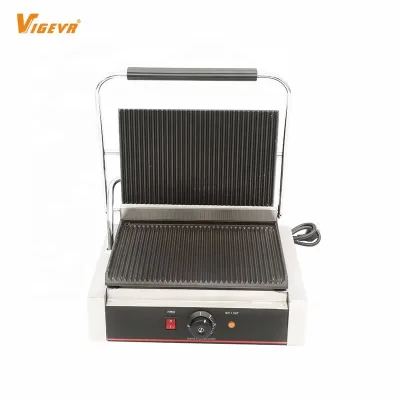
A defining feature of the "reversible" category is the ability to switch between grilling and flat-top cooking modes. This functionality is supported by detachable plate systems, which facilitate easier cleaning and maintenance. The coating on these plates is predominantly non-stick, a standard feature that ensures food release and simplifies the removal of residue. Furthermore, advanced models may include specialized features such as automatic steak height detection or unique opening angles, such as 105 and 180 degrees, which allow for versatile cooking styles ranging from sealed grilling to open-face preparation. The inclusion of a timing device is also common, providing users with precise control over cooking durations to ensure consistent results.
Compliance Standards and Certification Verification
Navigating the regulatory landscape is essential for B2B procurement, particularly when importing electrical appliances for international markets. The supply chain for these grills is heavily concentrated in China (Mainland), necessitating rigorous verification of compliance standards. The most frequently cited certifications in the current market include CE, RoHS, and LFGB. The CE mark indicates conformity with health, safety, and environmental protection standards for products sold within the European Economic Area. RoHS compliance ensures that the product restricts the use of specific hazardous materials, while LFGB certification is critical for food contact safety, particularly in German-speaking markets.
Some suppliers may also reference GS certification, which stands for "Geprüfte Sicherheit" (Tested Safety), a voluntary but highly recognized German safety mark. When evaluating potential suppliers, buyers should not rely solely on marketing claims but must request valid, up-to-date certification documents. The standard electrical safety requirements typically align with 220-240V~50/60Hz, 1800/2000W specifications. It is imperative to verify that the specific model's electrical standard matches the local regulations of the destination country. For instance, a unit marketed with a 2000W standard must be verified against the specific voltage and frequency requirements of the target region to ensure safe operation.
Safety features are also a component of compliance. Many units are equipped with safety locks and power cords of specific lengths, such as 0.8m, to mitigate risks associated with accidental activation or electrical hazards. Buyers should ensure that the product design incorporates these safety mechanisms as standard or optional features, depending on the risk profile of the intended application. The absence of these certifications or safety features in a product listing should be treated as a red flag, requiring immediate clarification from the supplier before proceeding with any order.
Cost Drivers and Pricing Structure Analysis
The pricing structure for detachable reversible electric contact grills is influenced by a complex interplay of factors, including power output, material quality, and feature complexity. The observed price range in the current market spans from approximately $6.50 to $145.60 USD. This wide disparity suggests that the market includes entry-level models with basic functionality alongside premium units featuring advanced technologies such as automatic detection systems or specialized coatings.
Several key drivers influence the final cost. First, the power rating is a significant factor; units with higher wattage capabilities, such as those reaching 2200W, often command a higher price point due to the increased cost of electrical components and heating elements. Second, the complexity of the design, including the mechanism for reversibility and the durability of the non-stick coating, affects manufacturing costs. Models with detachable plates that are easier to clean and maintain may also carry a premium.
Packaging and logistics also play a role in the total cost of ownership. The unit weight varies, with individual units ranging from 2.4kg to heavier configurations. The packaging dimensions, such as gift boxes measuring 37.616.437cm or cartons sized 67.63939cm, impact shipping costs. Buyers must consider the quantity per carton (Qty), which can range from 1 to 4 pieces per carton, as this affects the efficiency of shipping and the overall landed cost. Additionally, the Minimum Order Quantity (MOQ) is a critical cost driver, with observed ranges spanning from 1 to 2000 units. Lower MOQs may result in higher per-unit costs, while bulk orders can leverage economies of scale to reduce the price per unit.
Typical Applications and Market Segmentation
The versatility of detachable reversible electric contact grills makes them suitable for a wide array of applications across different market segments. The primary market for these products is identified as the United States and Europe, where demand for efficient, multi-functional cooking equipment is high. In commercial settings, such as restaurants, cafes, and food trucks, these grills are utilized for their ability to switch between grilling meats and cooking flat-top items like pancakes or eggs. The reversible feature allows kitchen staff to maximize the utility of limited counter space, a crucial consideration in busy commercial kitchens.
In the residential sector, these appliances appeal to home cooks who value convenience and space efficiency. The compact dimensions of many models, combined with the non-stick coating and detachable plates, make them ideal for home use where easy cleaning is a priority. The inclusion of timing devices and safety locks adds a layer of convenience and safety for less experienced users. Furthermore, the ability to cook at various angles, such as the 105 and 180-degree openings, allows for creative cooking techniques, such as making grilled sandwiches or cooking food in a vertical orientation.
The OEM (Original Equipment Manufacturer) nature of many products in this category indicates that these grills are often branded by retailers or distributors rather than the original manufacturers. This allows buyers to customize the product with their own branding, making it a viable option for private label strategies. The main market focus on the US and Europe suggests that the design and features of these grills are tailored to meet the preferences and regulatory requirements of these regions, particularly regarding food safety and electrical standards.
Supplier Evaluation and Quality Control Protocols
Selecting the right supplier is a critical step in the procurement process. Given the concentration of production in China (Mainland), buyers should prioritize suppliers who demonstrate transparency and a commitment to quality. The evaluation process should begin with a thorough review of the supplier's product catalog to ensure that the listed specifications match the buyer's requirements. Key attributes to verify include the power source (Electric), the presence of a timing device, and the customization options available.
Quality control should be integrated into the procurement strategy from the outset. Buyers should request samples to test the durability of the non-stick coating, the effectiveness of the detachable plate mechanism, and the accuracy of the power output. The unit weight and packaging dimensions should be verified to ensure they align with the supplier's claims, as discrepancies can lead to unexpected shipping costs or logistical issues. Additionally, the safety lock and power cord length should be tested to ensure they meet safety standards.
For larger orders, implementing a third-party inspection service is highly recommended. This ensures that the production batch meets the agreed-upon specifications before shipment. The inspection should cover the product model (e.g., GR-225, GR-234D, GR-323), the carton size, and the quantity per carton. Buyers should also verify the certifications, such as CE, RoHS, and LFGB, by requesting copies of the certificates and cross-referencing them with the issuing bodies. The absence of valid certifications or a refusal to provide them should be treated as a disqualifying factor.
Long-Term Procurement Considerations and Supply Chain Resilience
Sourcing detachable reversible electric contact grills is not merely a transactional activity but a strategic decision that impacts long-term business operations. Buyers must consider the scalability of the supply chain, particularly regarding the MOQ and lead times. While the observed MOQ range is broad, from 1 to 2000 units, buyers should negotiate terms that allow for flexibility in order quantities to adapt to market fluctuations. The ability to order in smaller batches initially can help mitigate the risk of overstocking, while the option to scale up to larger quantities ensures supply continuity during peak demand periods.
Another critical consideration is the customization potential. Many suppliers offer customization options, which can be leveraged to differentiate the product in a competitive market. This includes branding, packaging design, and potentially modifying technical specifications to meet specific customer needs. However, buyers must balance the desire for customization with the potential impact on lead times and costs.
Finally, buyers should plan for the lifecycle of the product. The availability of spare parts, such as replacement plates or power cords, is essential for maintaining customer satisfaction and reducing waste. The detachable nature of the plates suggests that they may wear out over time, and a reliable supply chain for replacements is necessary. By focusing on these long-term considerations, buyers can build a resilient supply chain that supports sustainable growth and customer loyalty in the competitive market for electric contact grills.
Comparative Analysis of Key Product Models
To assist buyers in making informed decisions, the following table summarizes the key specifications of several observed product models. This comparison highlights the variability in dimensions, power, and packaging, which are critical factors in the selection process.
| Product Model | Power Rating | Product Size (cm) | Plate Size (cm) | Unit Weight (kg) | Qty/CTN | Certification |
|---|---|---|---|---|---|---|
| GR-225 | 2000W | 34.631.913.7 | 29*23 | 2.4 | 4 PCS | CE, RoHS, LFGB |
| GR-234D | 1800/2000W | 3532.213.15 | 29.6*21.8 | 8.5 (N.W.) | 1 PCS | CE, RoHS, LFGB |
| GR-323 | 2000W | 34.631.913.7 | 29*23 | 9.0 (G.W.) | 1 PCS | CE, RoHS, LFGB |
| GR-234C | 2000W | 38.51937.7 | N/A | 9.0 (N.W.) | 2 PCS | CE, RoHS, LFGB |
| GR-402 | 2000W | N/A | N/A | N/A | N/A | CE, RoHS, LFGB |
| GR-127 | N/A | N/A | N/A | N/A | N/A | CE, RoHS, LFGB |
Note: Data is based on observed product attributes. Specific values for GR-402 and GR-127 are limited in the provided context. Buyers should verify all dimensions and weights with the supplier.
This comparative overview underscores the importance of detailed specification checks. While many models share similar power ratings and certifications, the physical dimensions and packaging configurations vary significantly. These differences can influence the choice of product based on the specific needs of the buyer's market, whether it is space constraints, shipping efficiency, or customer preferences for size and weight. By carefully analyzing these factors, buyers can select the most appropriate model to meet their strategic objectives.
FAQs
What power options are available for these grills?
Available power ratings range from 1800W to 2200W, typically operating at 220-240V. Some specific models are rated at a standard 2000W to ensure consistent heating performance for various cooking tasks.
Which certifications do these electric contact grills hold?
Common certifications include CE, RoHS, LFGB, and sometimes GS for safety and material compliance. These standards ensure the product meets health and environmental requirements for markets like Europe and the US.
Can the plates be detached for easier cleaning?
Yes, the plates are detachable to facilitate simpler cleaning and maintenance. This feature is standard across models and is often paired with a non-stick coating for improved food release.
How does the timing device function on the grill?
The unit includes a timing device to provide precise control over cooking durations. This feature helps ensure consistent results by allowing users to set specific cooking times for different food items.
What is the origin location for these manufacturing units?
The products originate from China Mainland, which is a primary hub for this type of electrical appliance manufacturing. Buyers should verify specific factory details when sourcing from this region.
Are customization options available for branding and packaging?
Customization is available for branding and packaging requirements, including OEM options. Buyers can often request specific gift box dimensions or carton configurations to suit their distribution needs.
What are the typical dimensions for the cooking plates?
Plate sizes vary by model, with common dimensions including 29*23cm or 29.6*21.8cm. These sizes define the cooking surface area available for grilling or flat-top cooking modes.
Does the grill feature a safety lock mechanism?
Yes, many models are equipped with a safety lock to prevent accidental activation. This feature enhances user safety, especially in commercial environments where the appliance might be left unattended.